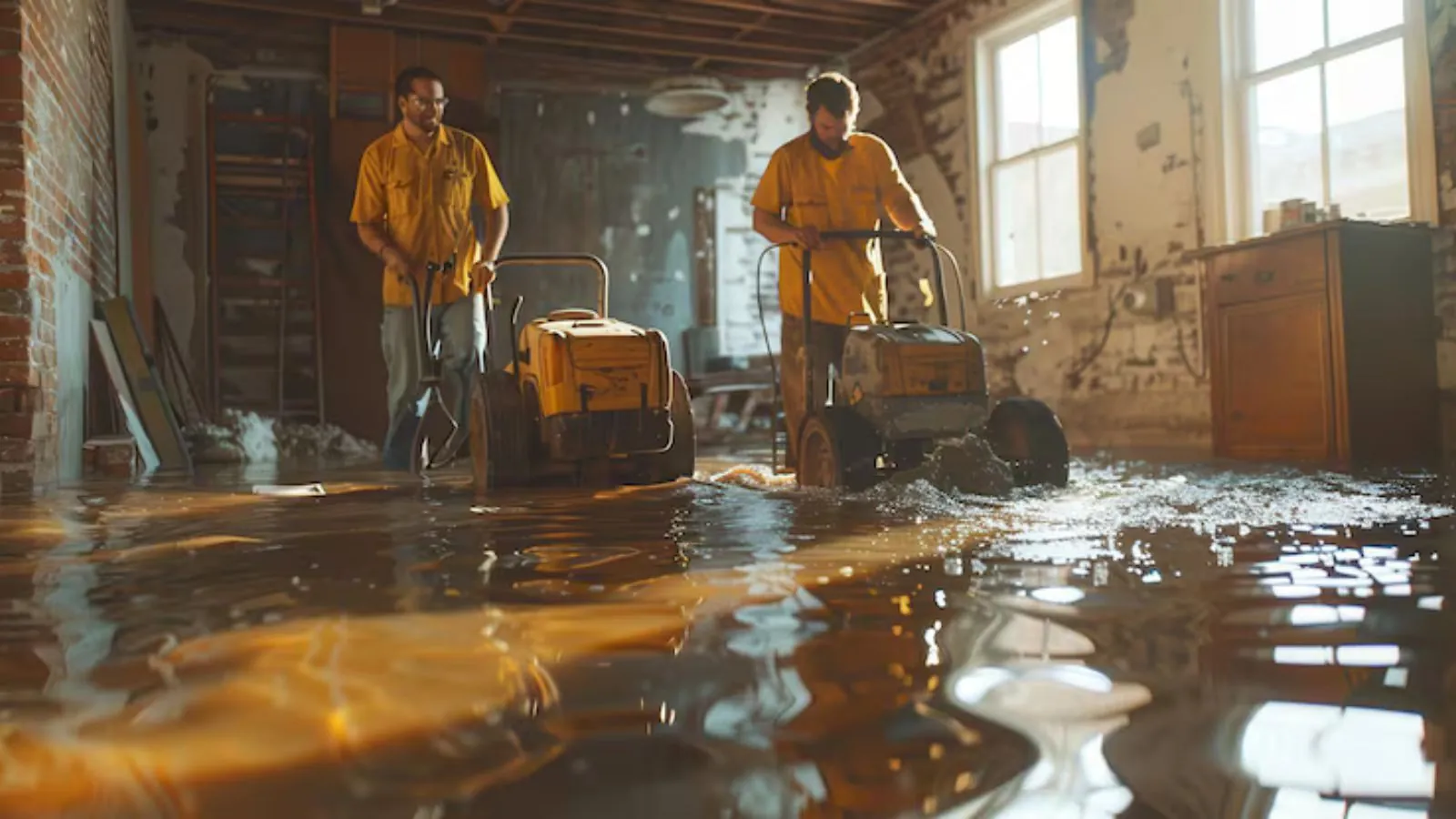
Why standing water works like a clock
Water does not stay where it lands. Within a day it wicks up drywall, slips under baseboards and soaks into subfloor seams, so a puddle on a tile floor turns into a wet wall cavity.
Pulling the bulk of it out early limits how many materials end up needing replacement. Extraction is the first physical step in almost every water loss, and drying only works once the free water is gone.
How we extract water from a Dedham home or shop
The equipment depends on the surface. Truck-mounted and portable extractors pull water from carpet and pad, submersible pumps handle several inches standing in a basement, and wet vacuums clear tile, vinyl and hardwood where water sits in the seams.
Stop the source
Close the shutoff or isolate the failed line so the loss stops growing.
Remove standing water
Pumps and extractors take out the free water from floors and low spots.
Find what is still wet
Moisture meters and thermal imaging show water inside walls and under floors.
Hand off to drying
Air movers and dehumidifiers take over once extraction is complete.
If the water looks like it comes from the main or the service line in the street, call the Dedham-Westwood Water District, which is the only water supplier in town and keeps an after-hours emergency line. Water that is already inside the building is where we work.
What the first walk-through covers
Before any equipment goes down, a technician walks the affected rooms with a moisture meter and notes where the water came from, how long it has been there and which materials absorbed it. That walk-through decides how much extraction, drying and tear-out the job needs.
We explain the scope and the price before work starts, in plain terms, so you know what is being removed and why. If you have a homeowners claim open, the notes and photos from this walk-through are the documentation your adjuster will ask about.
- Where the water entered and whether the source is stopped.
- Water category, from clean supply water to contaminated sources.
- Which floors, walls and contents are wet and how far it spread.
- Whether electrical items or outlets sit in the wet area.
Why the line stays open overnight
Burst lines and failed pumps do not wait for office hours. A Saturday night leak is still soaking the ceiling below it on Sunday morning, which is why the dispatch line stays open around the clock.
Call the dispatch line and tell us what you see. We offer same-day response when available.
Safety before the pump starts
Water and electricity are the main hazard in the first minutes. If standing water reaches outlets, power strips or an appliance, stay out of it and have the circuit shut off at the panel from a dry spot.
- Do not walk through standing water if cords or outlets are submerged.
- Move electronics, papers and small furniture to dry ground when it is safe.
- Photograph the water line and damaged items before anything is moved.
- Keep children and pets out of any water that may be contaminated.
Dedham sits between two rivers, the Charles and the Neponset, joined by Mother Brook, which was dug in 1639 to send Charles River water toward the Neponset. The state watershed flood model for this area was calibrated on the March 2010 flood and checked against Hurricane Ida in September 2021.
For a basement near the river corridors, that history is a practical reminder that heavy rain and a failed sump pump can arrive together. Knowing where your sump discharges and whether it has battery backup is worth ten minutes before the next storm.
What to do before we arrive
These steps are general safety guidance for a wet home or business. If anything feels unsafe, leave the area and call the dispatch line.
- Stay out of standing water if outlets, cords or appliances are near it, and shut off power at the panel only if the panel is dry and you can reach it safely.
- Move valuables, papers and small furniture to a dry room.
- Do not use a household vacuum on water.
- Photograph the water line before anything is moved.
What moves the price of water extraction
No two losses cost the same, so we do not quote a number over the phone. These are the factors that move the price once a technician has seen the property.
Water category
Clean supply water, grey water and sewage need different handling and protective gear.
Area and depth
A thin film across one room takes less equipment than several inches across a basement.
Materials affected
Carpet and pad, hardwood, drywall and insulation each respond differently to soaking.
Access and equipment
Stairs, tight crawl spaces and long hose runs add setup time.
Drying days
Extraction is only the start. How long drying runs depends on what stayed wet.
Rebuild scope
Tear-out and repair after drying are priced separately from the water removal.
Standard homeowners policies in Massachusetts generally do not cover flood, and the state Division of Insurance says a sump pump or water backup endorsement may add limited coverage. Read your own policy and report the loss to your insurer promptly.
When extraction leads to the next step
Most jobs do not end when the water is gone. Wet drywall, pad and insulation usually need structural drying, and a flooded lower level often becomes a basement water damage cleanup with its own tear-out questions.
If the water came from rising ground water or a river event rather than a pipe, our flood damage cleanup page explains how the scope differs.
Questions from Dedham property owners
Do you handle water extraction emergencies at night or on weekends in Dedham?
Yes. The line is staffed at all hours, so a pump-out can be scheduled for tonight rather than Monday. We offer same-day response when available and explain the scope and price before work starts.
Can I use a wet vacuum myself before you arrive?
A household wet vacuum helps with a small spill on a hard floor. For standing water across a room, soaked carpet or anything that may be contaminated, wait for professional extractors so you do not spread the water or leave moisture behind.
How do I know if water is still hiding after extraction?
Surfaces can feel dry while wall cavities and subfloors stay wet. A moisture meter and thermal camera show the difference, which is why every job includes a moisture check before drying equipment is set.
Do you explain the price before starting?
Yes. A technician walks the loss, then explains the scope and the price before work starts. We do not give exact figures over the phone because the water category, area and materials decide the cost.
Will my insurance pay for extraction?
That depends on your policy and the cause of the water. A sudden pipe or appliance failure is treated differently from groundwater seepage, so ask your insurer, and keep photos and notes from the first visit for the claim.