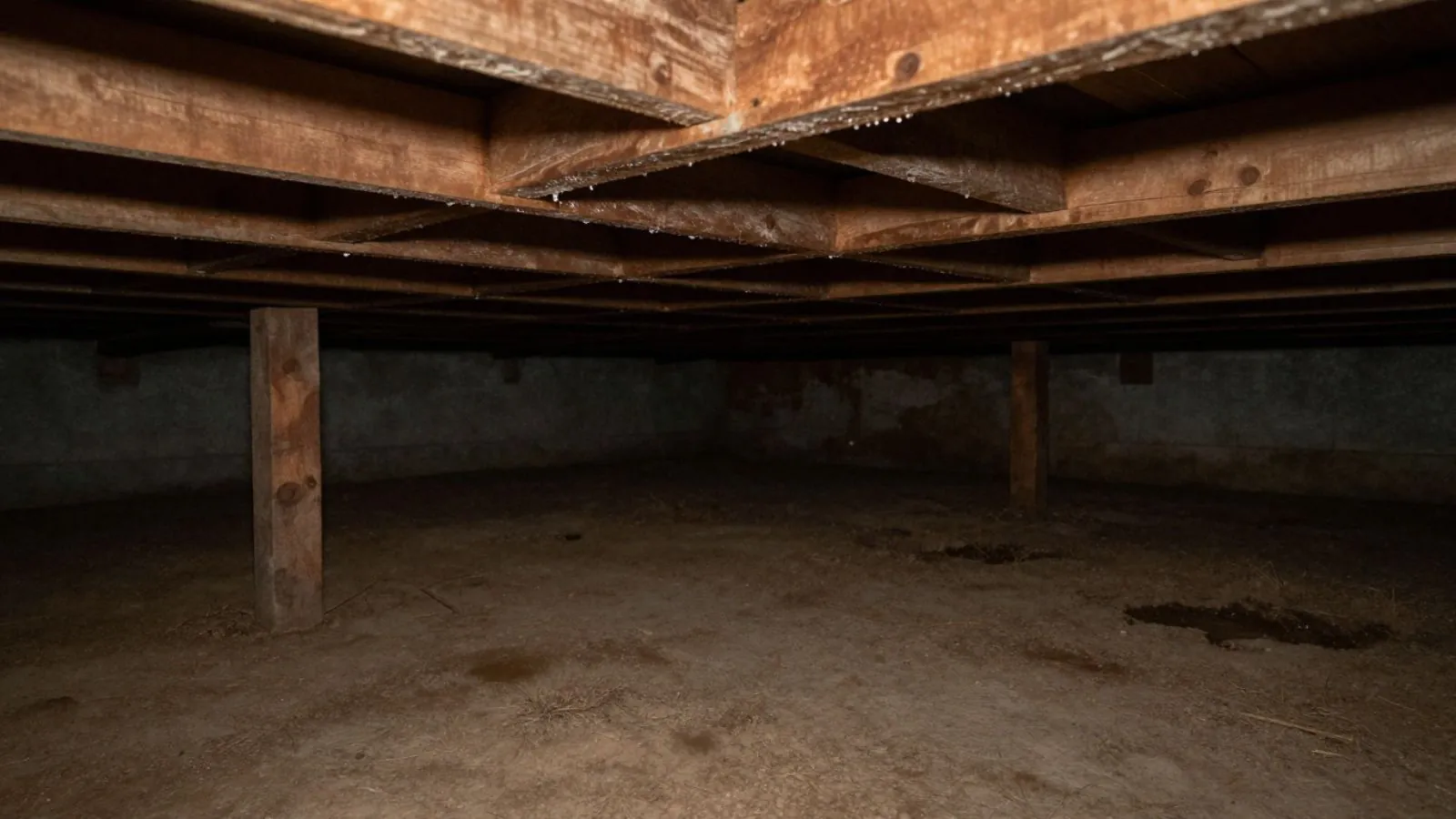
Why crawl space water gets missed
A crawl space is out of sight, so water can sit there for weeks. The first signs usually appear upstairs, such as a musty smell, cold floors, sagging insulation or boards that feel soft near an exterior wall.
Water gets in from plumbing leaks, from groundwater after heavy rain, from a failed sump pump or from vents and grading that let surface water run in. Each source leaves a different pattern, and the repair starts with identifying it.
What we do in a wet crawl space
Find the source
Check supply lines, drains and the sump area for a leak or failed pump.
Remove the water
Pump standing water and vacuum wet vapor barrier and insulation.
Dry the framing
Dehumidify and move air through joists, sills and the underside of the subfloor.
Confirm and report
Read moisture in the wood and give you a written scope for any repairs.
Wet fiberglass batts between floor joists are heavy and often fall. They hold water against the subfloor, so they come out rather than dry in place.
Tight access changes the work
Crawl spaces mean low clearance, lighting and PPE, and every hose and cord has to be run in by hand. That access time is real labor, and it is part of why the work is estimated on site after the space has been seen.
Call and describe what you see. We explain the scope and price before work starts.
Dedham sits between the Charles and Neponset Rivers, linked by Mother Brook, and the Riverdale drainage study of 2014 recorded repeated backyard flooding up to about four feet on Violet Avenue and Kiely Road, tied to undersized pipes and obstructions. Water collecting at grade is exactly what finds its way into a crawl space.
Massachusetts Division of Insurance guidance says basement wall and floor seepage is not covered by standard homeowners policies and no endorsement is available. If groundwater is the cause, ask your insurer what, if anything, applies to a crawl space.
Moisture, insulation and what to replace
Wet wood can dry. Wet insulation and torn vapor barrier usually cannot, and reinstalling them damp locks moisture against the framing. The crew notes which materials are still serviceable and which are not.
Related drying methods are explained on our structural drying page. If water has risen higher than the crawl space, see basement water damage cleanup for the broader process.
What a technician inspects first
Expect a technician to enter the space with a flashlight, a moisture meter and a camera, then check the sill plates, joists, subfloor underside and any ducts or pipes. Photographs are part of the record.
We explain the scope and price before work starts, including whether equipment will run in the crawl space or draw moisture from the rooms above.
Vapor barriers, vents and ground moisture
Ground moisture rises into a crawl space continuously. A vapor barrier over bare soil slows that, and a torn or missing barrier lets moisture into the air under the house.
Crawl space moisture often travels into the living space above. If you find humidity-related problems, see our guidance on AC leak water damage for condensate issues that mimic crawl space leaks.
Pipes and ducts in the crawl space
Supply lines, drain lines and ducts often run through a crawl space. A weeping joint or a disconnected duct can wet the floor above without any storm at all, and a technician traces each line when looking for the source.
What to do before we arrive
These steps are general safety guidance for a wet home or business. If anything feels unsafe, leave the area and call the dispatch line.
- Do not enter a crawl space that holds standing water if wiring or equipment is in it.
- Wear gloves and a respirator rated for dust if you must look inside.
- Stop any known water source and note where the water is entering.
- Photograph the area from the access point.
What affects the cost of crawl space cleanup
Water depth
Standing water takes pumps and time to remove.
Square footage
Larger crawl spaces need more equipment and labor.
Access
Narrow hatches and low clearance slow every task.
Insulation and barrier
Wet batts and torn vapor barrier come out and are replaced.
Drying days
Wood framing dries on its own timeline, shown by readings.
Repairs afterward
Sump pump, grading and drainage fixes are separate trades.
Standard homeowners policies in Massachusetts generally do not cover flood, and the state Division of Insurance says a sump pump or water backup endorsement may add limited coverage. Read your own policy and report the loss to your insurer promptly.
Questions from Dedham property owners
Can I go into the crawl space myself?
Only if it is dry, ventilated and you can move safely. Standing water, exposed wiring and loose insulation make a wet crawl space a poor place for a DIY inspection.
How do I know if there is water down there?
Musty odors, condensation on pipes, cupped floors above and sagging insulation all suggest moisture. A technician can confirm with a moisture meter and a look inside.
Does crawl space water cause mold?
Long-running moisture can lead to mold on wood and insulation. If you see growth or suspect it, our mold remediation page explains how a mold inspection and cleanup proceed.
Do you explain price before work starts?
Yes. We explain the scope and price first, based on what we find on site.