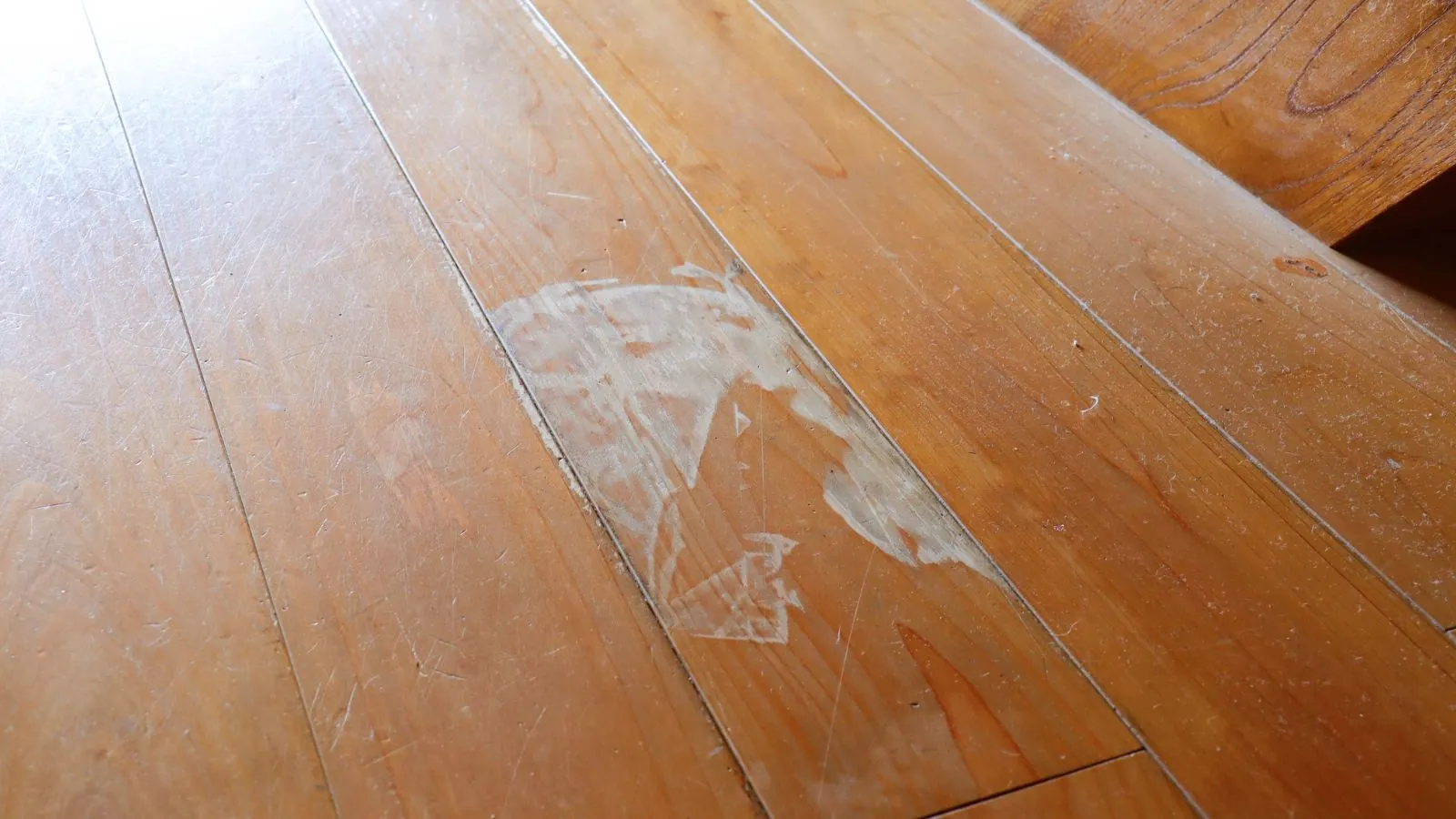
What water does to a wood floor
Wood absorbs moisture and swells. Boards that take on more moisture at the bottom than the top curl at the edges, which is called cupping, and boards that swell against each other can lift off the subfloor in what is called crowning or buckling.
The floor often looks worse a few days after the water than it did right away, because the moisture keeps moving through the board. That is why a quick check with a moisture meter matters.
Walnut floor, condensate line
Dense species such as walnut move more than people expect from a small leak. A condensate line from an HVAC unit that drips onto or beside a floor can raise moisture in a few boards that then cup visibly, with no flood to explain it.
If you notice a few cupped boards near a heating or cooling unit, an air handler or a pipe, check the source first. Our AC leak water damage page explains how condensate leaks happen.
Call and describe the floor. We explain the scope and price before work starts.
What can be saved
Solid hardwood that has only been wet on the surface for a short time can often be dried with specialized equipment, including mats that pull moisture from the boards. Floors that sat under water for days, or that were soaked with sewage or floodwater, may need replacement.
Engineered flooring has a layered core that can delaminate when it swells, so it is less forgiving. Floors finished with a thick coat of polyurethane can trap moisture below the surface, which slows the drying.
- Surface water on a sealed floor, cleaned up fast: often saved.
- Cupping a few days after a small leak: dry first, then wait before sanding.
- Buckled boards lifting off the subfloor: often replaced in the damaged area.
- Floors soaked by sewage or floodwater: usually removed.
Dry first, sand later
Sanding a floor that is still wet seals the moisture in and can leave it cupped again. We dry the floor until readings are steady, then give it time before anyone sands or refinishes.
Refinishing is a separate step done by a flooring contractor once the wood is dry. We explain which of the steps we handle and which belong to the flooring trade.
Dedham was settled in 1635 and the Fairbanks House on East Street dates to 1637, so the town has a lot of old wood. In any older house, floors may have been refinished several times, which leaves less wear layer to sand after a water event, and we confirm board thickness during the assessment rather than assuming.
If a repair involves replacing subfloor or a long run of flooring, ask the Building Department at Town Hall whether a permit applies. The town’s FAQ says most home improvement projects require one.
How we dry a hardwood floor
Measure
Read the boards and subfloor to find how far the moisture goes.
Remove water
Extract surface water and lift baseboards for airflow.
Dry
Use floor drying equipment and dehumidifiers and read the boards each visit.
Wait and assess
Let the wood settle before deciding on repair or replacement.
Water under a wood floor in a basement or crawl space is a different situation, and structural drying explains how we dry subfloors and framing.
What the first inspection covers
The technician checks board thickness, finish, subfloor type and the moisture level across the room, working outward from the wet area. Photographs show the cupping so it can be compared after drying.
We explain the scope and price before work starts, including what we expect to dry, what may need replacement and what falls to a flooring contractor.
What to do before we arrive
These steps are general safety guidance for a wet home or business. If anything feels unsafe, leave the area and call the dispatch line.
- Pick up area rugs and wet items so they do not stain the boards.
- Do not use heat guns or fans aimed straight at the floor.
- Wipe standing water with towels and mop sparingly.
- Photograph the boards before anything is removed.
Hardwood repair cost factors
Species and thickness
Dense wood and thin engineered boards react differently.
Time wet
Boards wet for days are less likely to recover.
Water category
Contaminated water usually means removal.
Area
Square footage drives equipment and labor.
Drying days
Hardwood dries slowly and is confirmed by readings.
Refinish or replace
Sanding, repair and refinishing are priced separately.
Standard homeowners policies in Massachusetts generally do not cover flood, and the state Division of Insurance says a sump pump or water backup endorsement may add limited coverage. Read your own policy and report the loss to your insurer promptly.
Questions from Dedham property owners
Will cupped boards flatten again?
Often, if the cause is moisture and the floor is dried correctly. Flattening can take weeks, and we wait for stable readings before anyone sands.
How soon should I call after a leak?
As soon as you find it. Wood moves more the longer it stays wet, and early drying gives the boards the best chance.
Can I use a fan and a dehumidifier myself?
Some people do, but too much heat or airflow can crack boards, and without a moisture meter it is hard to know when to stop. A professional drying plan uses readings to control the process.
Do you refinish floors?
No. We dry the floor and assess the damage. A flooring contractor sands and refinishes once the wood is dry.
Do you explain price first?
Yes. We explain scope and price before work starts.