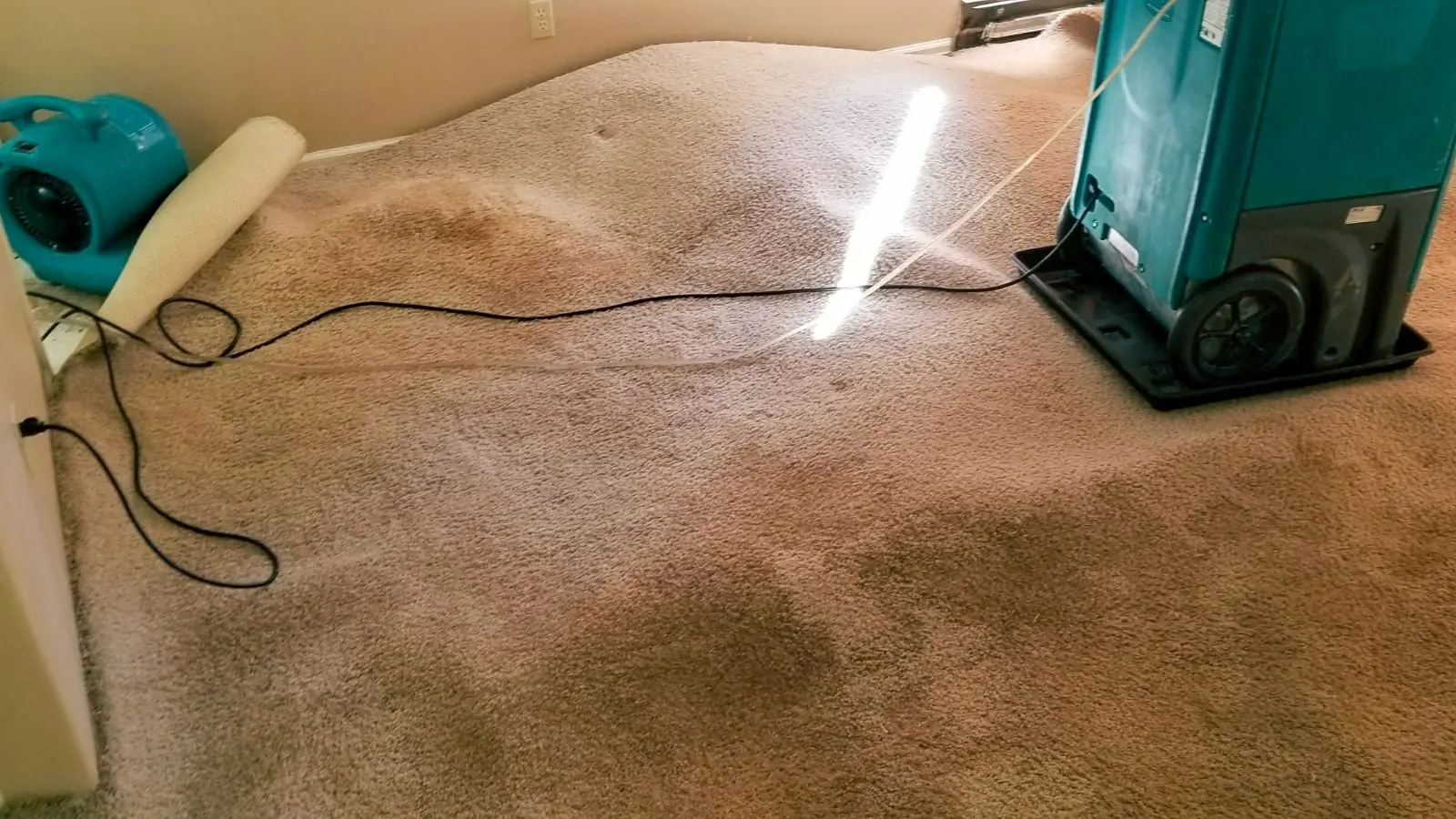
Carpet and pad are two different problems
Carpet fibers dry relatively fast, but the pad underneath holds water like a sponge. The pad, and the subfloor under it, are where most carpet water problems actually sit.
That is why a carpet that feels dry on top can still be wet underneath. We check all three layers before deciding anything.
When carpet can be dried in place
- The water was clean, such as a supply line or appliance leak.
- Drying started within a day or two.
- The carpet is firmly attached and has no delamination or odor.
- The pad can be dried or is replaced separately.
Wall-to-wall carpet is often lifted at one corner so the pad can be removed and the carpet dried over it with air movers. If the pad is soaked, it is usually replaced, which costs far less than replacing the carpet itself.
When carpet should come out
Carpet that was soaked by floodwater, sewage or other contaminated water should not be saved. The same goes for carpet that sat wet for several days, grew odor or has begun to separate from its backing.
Water category matters here. Our sewage backup cleanup page covers the contaminated case, and the drying methods are explained under structural drying.
Call and tell us where the water came from and how long the carpet has been wet.
Carpet over a concrete slab in a basement is a typical case for any New England house. The Massachusetts Division of Insurance says seepage through basement walls or floors is not covered by standard homeowners policies and no endorsement is available, so ask your insurer how a groundwater loss would be treated.
Sump pump or water backup endorsements may provide limited coverage. Photographs of the carpet and the water line help any claim, and so do our readings.
How we handle a carpet loss
Identify the water
Confirm the source and decide whether the water was clean or contaminated.
Extract
Use a weighted extractor to pull water from the carpet and pad.
Lift and dry
Pull the carpet back, remove or dry the pad and dry the floor underneath.
Verify
Check the carpet, tack strip and subfloor with a moisture meter.
If the carpet was in a flooded lower level, basement water damage cleanup explains the wider process.
What the technician checks first
The first reading is on the carpet surface, then the pad and then the slab or subfloor. A technician also checks for odors, delamination and tack strip rust, which show how long the carpet has been wet.
We explain the scope and price before work starts, including whether the pad will be replaced and whether the carpet can be reinstalled.
Stairs, bedrooms and carpet over a wood subfloor
Carpet on a wood subfloor in a bedroom or stairway behaves differently from carpet on concrete. The wood floor below absorbs water, so the subfloor and the joists under it have to be checked, not just the pad.
On stairs, the carpet is stretched over padding and nailed through the tread edges. Water that runs down a stairway can soak several steps and the wall beside them, and the carpet is usually lifted in sections to dry it.
Area rugs, wool and delicate carpet
Wool and silk rugs and some specialty carpet can shrink or bleed color when wet. They are often sent to a cleaner who handles them, and we will tell you if a rug is worth rescuing before we move it.
Photographing the carpet before it is lifted helps with claims. Keep a swatch or tag, because an adjuster may ask for the carpet type.
What to do before we arrive
These steps are general safety guidance for a wet home or business. If anything feels unsafe, leave the area and call the dispatch line.
- Take furniture off the carpet and lift any wet padding corners only if you can do it safely.
- Do not walk on wet carpet with shoes that have been outdoors.
- Do not use a household vacuum to pull water out.
- Wear gloves if the water was not clean.
Carpet restoration cost factors
Water category
Clean water allows drying in place, contaminated water does not.
Time wet
Carpet wet for days usually needs replacement.
Area
Larger rooms need more equipment and labor.
Pad and tack strip
Replaced separately from the carpet.
Drying days
Readings decide when equipment comes out.
Replacement
New carpet and pad are priced after the assessment.
Standard homeowners policies in Massachusetts generally do not cover flood, and the state Division of Insurance says a sump pump or water backup endorsement may add limited coverage. Read your own policy and report the loss to your insurer promptly.
Questions from Dedham property owners
Is it worth saving wet carpet?
If the water was clean and the carpet is dried quickly, often yes, because replacing only the pad is cheaper than new carpet. If the water was contaminated, replacement is the safe choice.
Do you replace the pad?
The pad is usually removed and replaced when it has been soaked, because it holds water and dries slowly. We tell you on site whether yours can be dried or needs replacing.
How do I stop a musty smell?
The smell comes from moisture in the carpet, pad or subfloor, so the fix is drying all three. Odor treatments on top of wet carpet do not last.
How soon should I call?
As soon as you find water. The first day decides whether carpet can be saved.
Do you explain price first?
Yes. We explain scope and price before work starts.