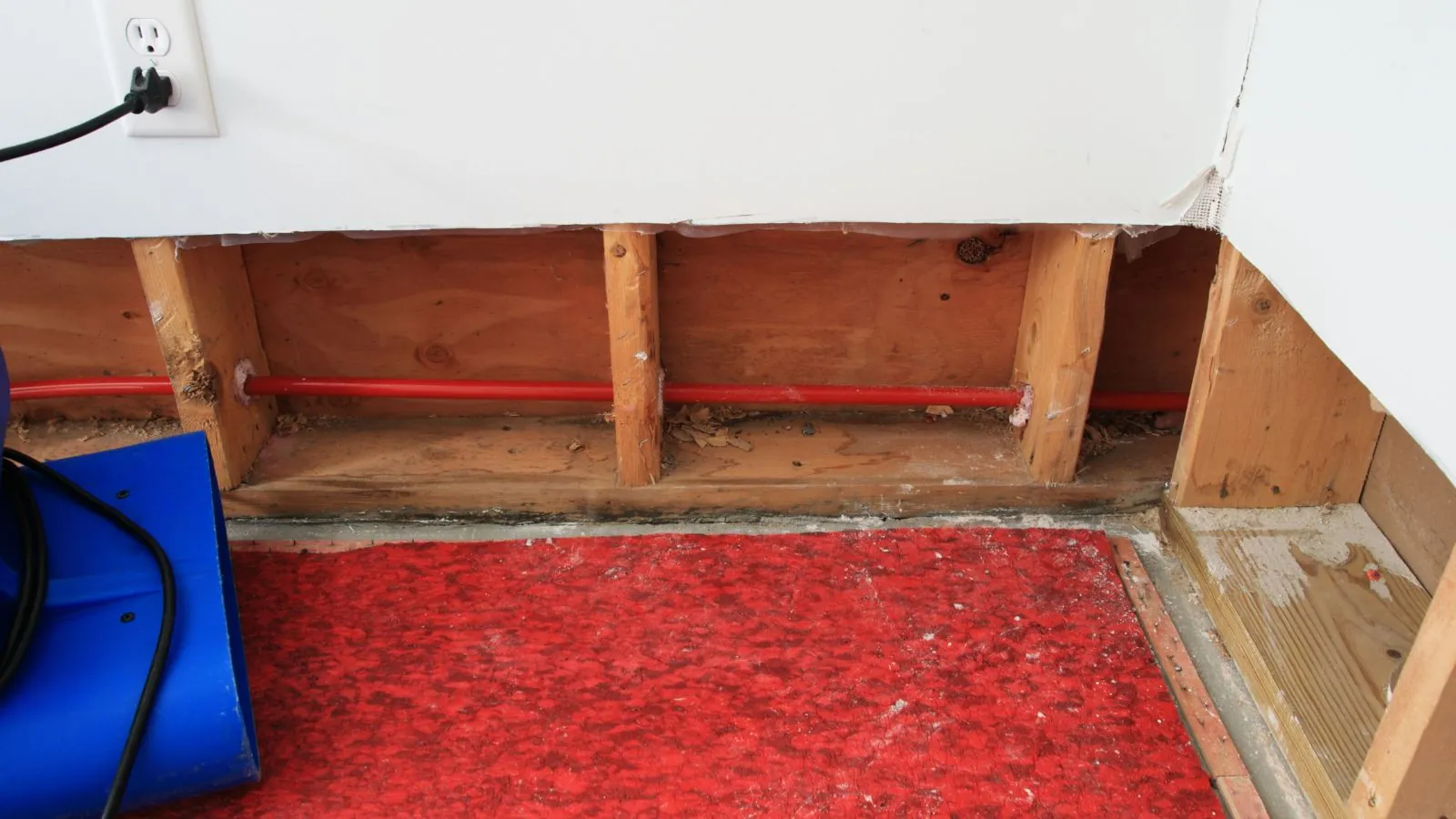
Three kinds of basement water
Water in a basement usually comes from one of three places. A plumbing or appliance leak puts clean water on the floor, a failed sump pump or backed-up floor drain brings in groundwater or sewer water, and seepage through walls and floors comes from the soil.
Which one it is decides how we clean it and what insurance may say about it. The crew checks the source and the water category before starting.
Finished basements and what is at risk
Carpet, pad, wall framing, drywall, stored boxes and furniture all sit against a slab that can hold moisture for a long time. Water wicks upward into drywall and baseboards, often well above the visible line.
Carpet over pad in a finished basement is the most common loss. If the water was clean and the carpet is caught early, drying in place is sometimes possible, and our carpet water damage page explains when.
Call now, stay off wet floors near outlets and tell us how deep the water is.
Basement emergencies at night
A sump pump that quits during a storm usually does so when nobody is watching. We answer the line at every hour and offer same-day response when available.
Dedham’s Manor neighborhood is described in the town’s engineering case study as flood-prone, and an October 2014 drainage study of the Riverdale area around Violet Avenue and Kiely Road found backyard flooding up to about four feet, caused by undersized pipes and obstructions. Water at grade level around a house eventually becomes water in the basement.
The Massachusetts Division of Insurance says seepage through basement walls or floors is not covered by standard homeowners policies and no endorsement is available. A sump pump or water backup endorsement may provide limited coverage for backup, so read your own policy.
Our cleanup process
Source and safety
Identify the water source and make sure power in the wet area is safe.
Pump and extract
Remove standing water and vacuum saturated carpet and pad.
Open and dry
Remove materials that cannot be saved and set dehumidifiers and air movers.
Verify
Record readings until walls and floors are dry enough to rebuild.
Restoration is not waterproofing
We clean up and dry basements after water gets in. Keeping water out is a different trade, including grading, drainage, exterior work and sump systems, and we do not do basement waterproofing.
If the same basement floods again, the answer is usually a drainage fix by a waterproofing specialist or a plumber, and we will tell you if the pattern suggests one. For the drying process itself, see structural drying.
What we check on the first visit
Expect moisture readings on the slab, wall bases and framing, a look at the sump pit and a note of the water line on walls. The technician records the source, category and affected materials before we start.
We explain the scope and price before work starts. If materials such as insulation and carpet have to come out, we show you why.
Before the next storm
Test the sump pump by pouring water into the pit until the float lifts, and check that the discharge pipe sends water well away from the house. A battery backup keeps the pump going when the power fails, which is when many pumps are needed most.
What to do before we arrive
These steps are general safety guidance for a wet home or business. If anything feels unsafe, leave the area and call the dispatch line.
- Do not go down to a basement with standing water if the panel, furnace or outlets are in it.
- Shut off power to the basement circuits at the panel if you can reach it from a dry place.
- Do not pump water out all at once, since that can stress walls and floors.
- Move items from the lower shelves and floor upward.
Owners near Violet Avenue and Kiely Road can read what the town has documented on our Riverdale page.
Pricing factors in a basement loss
Water depth
Several inches across a finished floor is a larger job than a damp patch.
Water category
Groundwater and sewer water add removal and sanitizing steps.
Finished materials
Carpet, drywall, paneling and insulation.
Square footage
Larger basements need more equipment and drying time.
Drying days
Concrete and framing dry slowly and are verified by readings.
Rebuild scope
Flooring and walls are replaced after drying.
Standard homeowners policies in Massachusetts generally do not cover flood, and the state Division of Insurance says a sump pump or water backup endorsement may add limited coverage. Read your own policy and report the loss to your insurer promptly.
Questions from Dedham property owners
Do you handle basement water damage emergencies at night or on weekends in Dedham?
Yes. Basements often flood at night during storms and when a sump pump fails, so the line answers at every hour, every day. We offer same-day response when available and explain the scope and price before work starts.
Is this the same as waterproofing?
No. We restore and dry a basement after water has entered. Waterproofing, grading and drainage work belong to other trades, and we will tell you if the pattern suggests you need one.
Can I save wet boxes and stored items?
Often yes if the water was clean and items are dried promptly. Cardboard and paper break down quickly, so move them to dry ground and sort them.
How do I know if my sump pump failed?
If the pit is full, the pump does not turn on or the float is stuck, it has probably failed. A plumber can test or replace it, and a battery backup helps in power outages during storms.
Do you explain price before starting?
Yes. We explain scope and price first and do not quote exact figures over the phone.