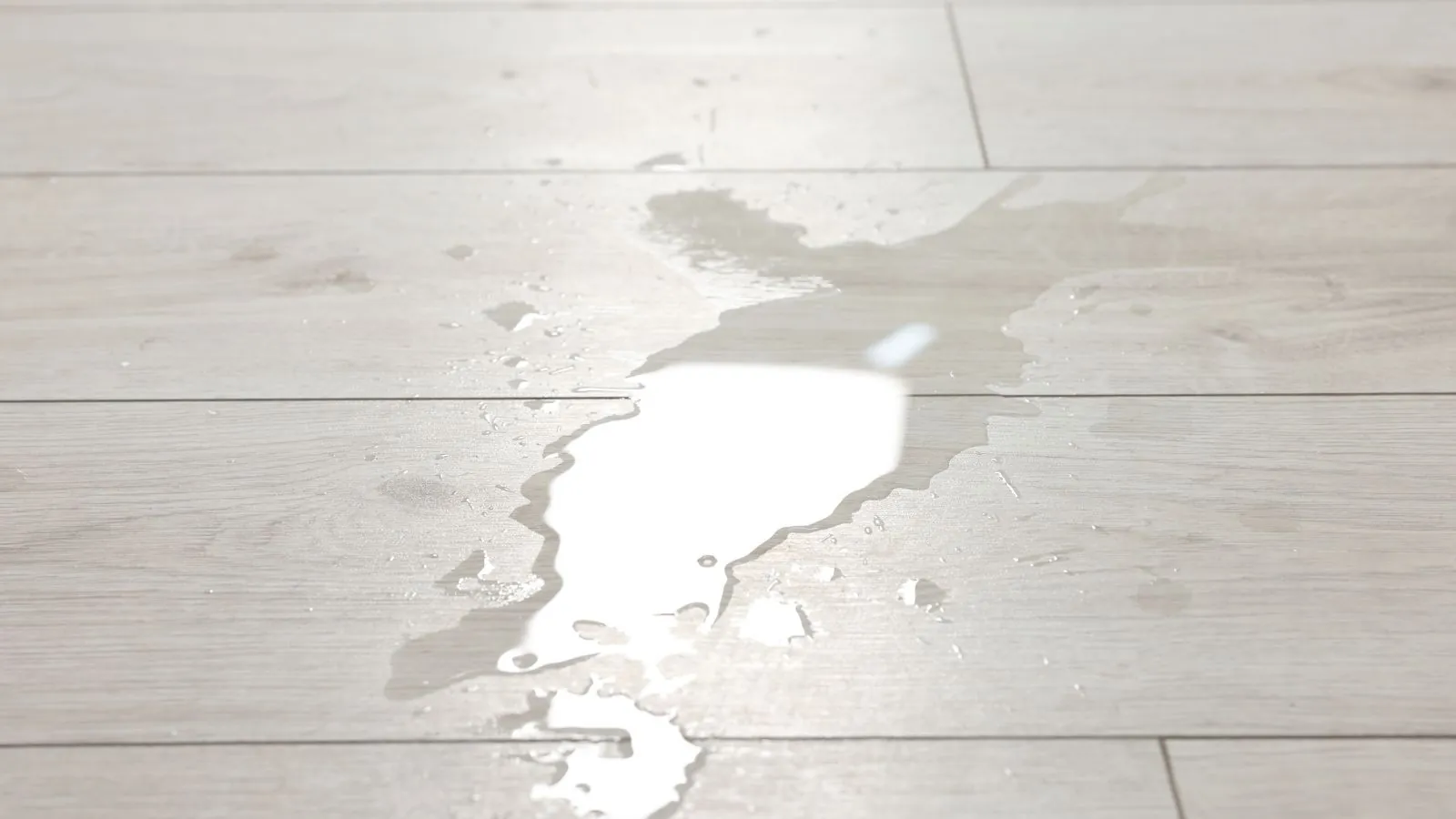
Where appliance leaks come from
Most appliance water losses start at a hose, a valve or a drain connection, not at the machine itself. Braided washer hoses, dishwasher supply lines, refrigerator ice maker tubing and drain pans are the common failure points.
A washer supply valve that is left open under pressure is a leak waiting to happen. When a hose bursts, water can run for as long as the valve stays open, so the first step is always the shutoff.
The washer valve and the supply line
Close the supply valves behind the washer if you can reach them safely. If the valve will not turn or is weeping, shut off the water to the house or to that floor instead.
Water from a washer hose often travels under the floor and into the ceiling below. A laundry room above a finished space is where small leaks become expensive ones.
Slow leaks inside walls and under floors
Dishwashers and refrigerator lines can drip for months. The signs are a musty smell in the kitchen cabinet, a soft toe kick, buckled flooring at the edge of the machine or a stain on the ceiling in the room below.
A slow leak is not smaller damage, only slower. It reaches the subfloor and wall framing, and by the time it shows, drying often has to include removing flooring or a cabinet base.
Call the dispatch line. Shut off the valve behind the machine and unplug it if the floor is dry.
Leaks do not keep office hours
Machines run overnight and while people are out, so a failed hose is often found after hours of flow. We answer the dispatch line at every hour and offer same-day response when available.
Dedham charges sewer fees based on water meter usage from the Dedham-Westwood Water District, so a leak that runs for hours or days can add to both bills. Keep a note of when you found the leak and when you shut the valve, because the district and your insurer may both ask.
If the leak reaches a unit below you, as in a condominium or two-family house, document the water path with photographs before anything is moved and tell the building owner or association promptly.
Our cleanup steps
Stop and unplug
Water off at the valve and the appliance unplugged from a dry spot.
Extract
Vacuum or pump water from the floor and cabinet base.
Check beneath
Meter the subfloor, baseboards and the ceiling below.
Dry and rebuild
Dry in place where possible and remove only what will not dry.
Kitchen leaks often involve cabinetry and flooring together, which is covered in kitchen water damage restoration. When the water reached the ceiling below, ceiling water damage repair describes that work.
What the technician measures first
The first reading is at the appliance itself, then outward across flooring and up the walls. A thermal camera shows where water is hiding under laminate or behind a cabinet toe kick.
We explain the scope and the price before work starts, including whether cabinets, flooring or drywall need to come out.
Small habits that prevent big leaks
Turn off the washer supply valves when you leave on a long trip, and look behind the machine when you replace it. A new appliance deserves new supply hoses, and a drain pan under a washer on an upper floor is cheap protection.
What to do before we arrive
These steps are general safety guidance for a wet home or business. If anything feels unsafe, leave the area and call the dispatch line.
- Unplug the appliance only if the outlet and the floor around it are dry.
- Close the shutoff valve behind the machine or at the supply line.
- Pull the appliance away from the wall only after the water has stopped.
- Check the floor under and behind it for soft spots.
Landlords and tenants can read how we handle rental losses on our East Dedham page.
What affects the price of an appliance leak job
Time running
Hours of flow reach further than a quick drip caught early.
Flooring
Laminate, vinyl plank, tile and hardwood each tolerate moisture differently.
Cabinets
Wet cabinet bases may need to be removed to dry the floor beneath.
Rooms below
Water that dropped to a lower floor adds ceiling and wall work.
Drying days
Equipment stays until readings return to normal.
Repair scope
Replacement of finished surfaces is priced after drying.
Standard homeowners policies in Massachusetts generally do not cover flood, and the state Division of Insurance says a sump pump or water backup endorsement may add limited coverage. Read your own policy and report the loss to your insurer promptly.
Questions from Dedham property owners
Do you handle appliance leak emergencies at night or on weekends in Dedham?
Yes. The line is answered all night and on weekends, which is when washers and dishwashers tend to fail. We offer same-day response when available and explain the scope and price before work starts.
Should I replace the washer hose after a leak?
Replacing an old rubber or braided hose is inexpensive compared with water damage. A plumber or appliance technician can swap supply lines, and many people replace both hoses at the same time.
Can wet laminate or vinyl plank floors be saved?
Sometimes. Laminate swells when water reaches its core, while some vinyl plank handles surface water well. Moisture readings under the planks tell us whether drying in place is realistic.
Will insurance pay for an appliance leak?
Many policies treat sudden appliance leaks differently from long-term seepage. Read your own policy, report the loss promptly and keep the failed part if you can.
Do you explain price before work starts?
Yes. We explain the scope and price first and do not quote exact figures over the phone.