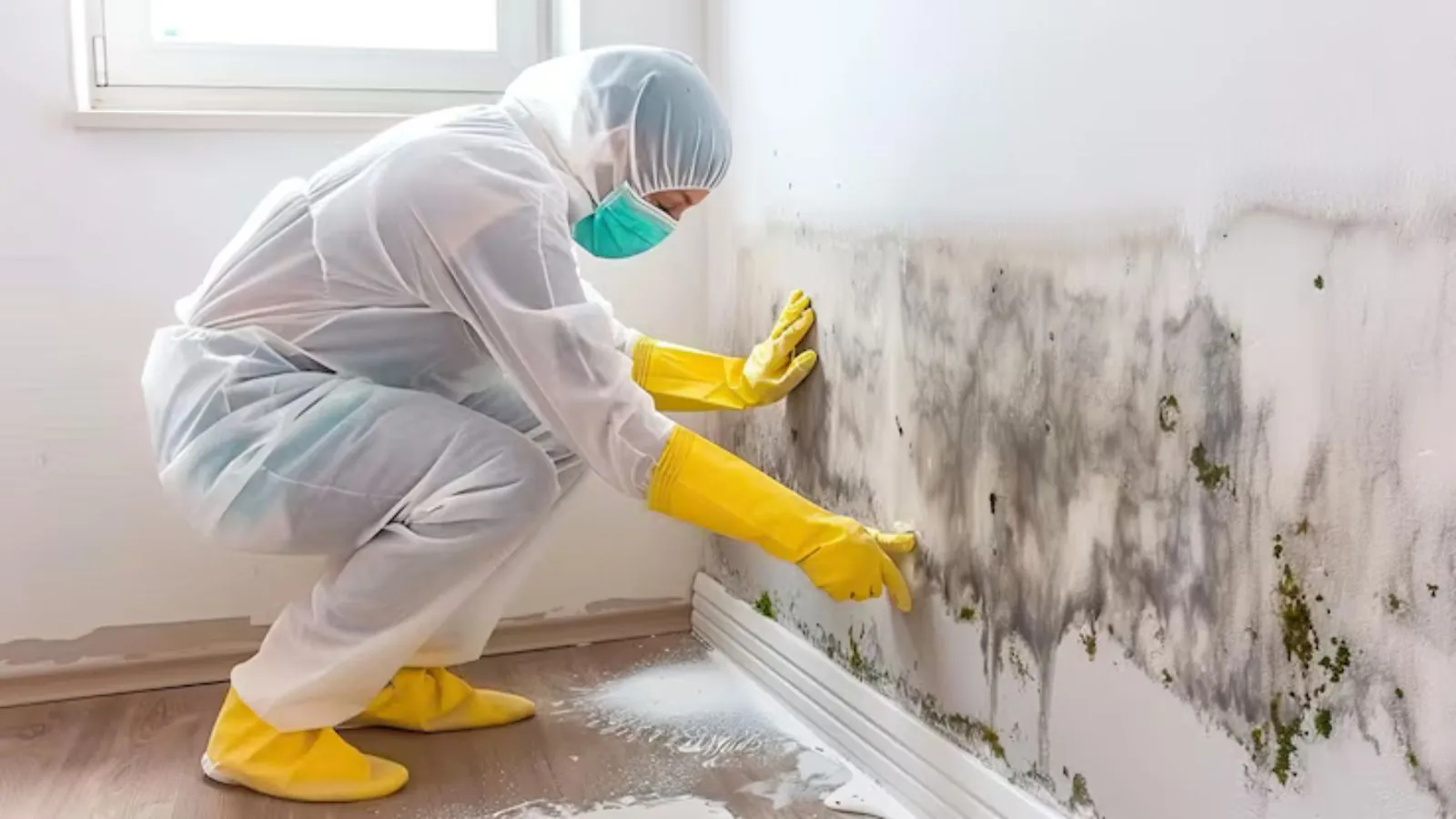
What mold on a wall tells you
A spot on a wall means that spot has been damp. The question is whether the dampness comes from the room, such as steam or condensation, or from inside the wall, such as a leak.
Surface moisture usually leaves growth on paint or wallpaper only. A leak inside the wall also wets drywall paper and insulation, and the damage is deeper than it looks.
Check the wall before you scrub it
- Press gently near the spot and see if the drywall feels soft or swollen.
- Look for paint that bubbles, stains that spread or tape that lifts.
- Check the other side of the wall for plumbing, a window or an exterior face.
- Use a moisture meter if you have one, or ask a technician to.
- Smell for a damp, earthy odor that stays when the room is dry.
If the wall is soft or reads wet, scrubbing the surface does not help. The drywall behind it needs to be dried or replaced, which is what our wall and drywall water damage repair work covers.
Surface cleanup that works
The EPA homeowner guide says a moldy area under about 10 square feet can in most cases be handled by the homeowner. For painted drywall with light surface growth, a damp cloth with detergent, then a clean damp cloth and a fully dry wall, is the standard approach.
Do not soak drywall to clean it, because that adds water to a material that absorbs it. Work with a barely damp cloth, and dry the wall quickly with a fan and a dehumidifier.
| Wall condition | Fix | Who usually does it |
|---|---|---|
| Light surface growth on firm painted drywall. | Clean with detergent, dry, prime. | Homeowner for small areas. |
| Drywall soft, swollen or stained through. | Cut out and replace. | Restoration company or contractor. |
| Growth on both sides or on the insulation. | Open the wall, remove and dry. | Restoration company. |
| Large areas or repeat growth. | Find the source, then remediate. | Restoration company with independent testing if documentation is needed. |
Dedham’s older houses may have plaster over lath rather than drywall, and plaster behaves differently, drying more slowly and resisting a quick patch. Know which you have before you plan the repair.
If a wall repair involves plumbing, electrical work or structural changes, ask the Building Department at Town Hall about permits. The town’s FAQ says most home improvement projects need one.
Find and stop the water
Moisture is the root cause. Common sources are a leaking window or siding, a plumbing line in the wall, a roof leak that runs down the wall and condensation on a cold exterior wall.
If the wall belongs to a bathroom or kitchen, a pipe or fixture is the likely culprit, and a plumber should check it. If the water came from above, our ceiling water damage repair page explains how roof and plumbing leaks reach walls.
When to bring in a professional
Call when the area is larger than a small patch, when drywall is soft, when growth returns after cleaning or when you cannot find the water. A professional assessment includes moisture mapping and a written scope.
Ask whether your state licenses mold work. We make no health claims and no promise that growth will not return, since that depends on controlling moisture over time.
Insulation behind the wall
Insulation soaked by a leak does not dry well and often holds moisture against the framing. When a wall is opened, wet fiberglass or cellulose is usually removed and replaced, and the cavity is dried before new insulation goes in.
This is the reason a quick patch rarely holds. The visible spot is the end of a path that ran through insulation, drywall and framing.
Exterior walls and condensation
A cold exterior wall can collect condensation on its inner face, especially behind furniture or in a corner. Moving furniture out a few inches, running a dehumidifier and improving air circulation reduce it.
If the condensation returns every winter, the cause may be insulation gaps or air leaks, and a contractor or energy auditor can look at the wall. Cleaning will not fix a problem that comes back each season.
What a professional wall assessment includes
Expect moisture readings at several heights, a thermal image of the wall and a check of the other side of the wall and the floor and ceiling nearby. A technician can then tell you whether the wall can be dried in place or needs to be opened.
We explain the scope and the price before work starts. If a plumber or roofer needs to fix the cause first, we say so and coordinate the order of work.
A note on odors
A musty smell with no visible growth often means moisture inside a wall or under a floor. Dehumidifiers and air fresheners cover the smell without fixing it, so look for the source first.
Closing the wall up
Do not close a wall until a moisture meter shows it is dry. New drywall over a damp cavity just moves the problem behind fresh paint.
Once the wall is dry, replace insulation if it was wet, install new drywall, tape and finish it, and prime before painting. A stain-blocking primer helps cover stains, but it is not a moisture treatment.
If you want to know whether we respond to your street, the service area page lists the ZIP codes and neighborhoods in Dedham.
Questions from Dedham homeowners
Can I paint over mold on a wall?
Painting does not remove the growth or the moisture behind it. Clean the surface, fix the water problem, dry the wall and prime before painting.
How do I know if the drywall needs to come out?
If it is soft, swollen, stained through or still reads wet after drying, it usually needs to be replaced. A moisture meter and a thermal camera give a clearer answer than looking.
Does an old plaster wall need different treatment?
Plaster dries slowly and cannot be patched like drywall. A technician identifies the wall material before recommending drying or removal.
Do I need independent testing?
Not always. It helps when an insurer, lender or buyer wants documentation, and we recommend a third party for that.