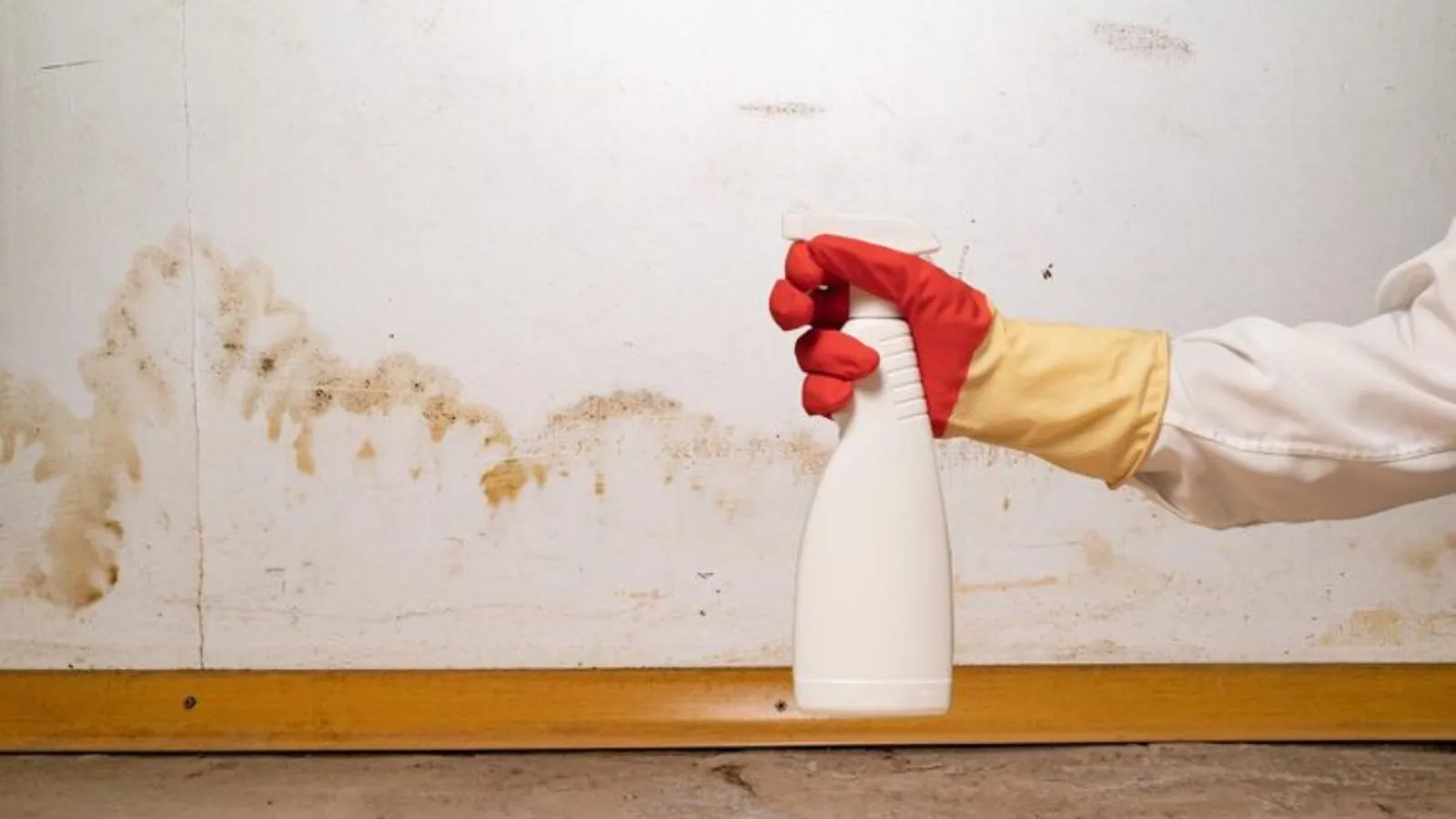
What you are probably looking at
Dark spotting on grout, caulk or a ceiling corner is often surface growth that follows moisture. Bathrooms make steam, and any area that stays damp after a shower can grow mold over time.
The color does not tell you the species. Black, green and gray growth all call for the same first step, which is finding out why that spot stays wet.
Start with the moisture source
The EPA states that the key to mold control is moisture control, and that water-damaged areas and items should be dried within 24 to 48 hours to prevent growth. Cleaning mold without fixing the water problem is a short-term fix.
- A fan that does not exhaust outdoors or is not run long enough.
- A shower pan, tub seal or caulk line that leaks into the wall.
- A supply line or drain that weeps behind a vanity.
- A ceiling stain from the room above.
- Condensation on cold exterior walls or windows.
If you find a leak, stop it first, then dry the area. A plumber handles the pipe, and our burst pipe water damage page explains the cleanup that follows a failed line.
A simple way to size it up
| What you see | Likely approach | Why |
|---|---|---|
| A small patch on grout or caulk, under about 10 square feet. | Clean it yourself, then dry and ventilate. | EPA guidance uses about 10 square feet as the size line for most homeowner cleanup. |
| A larger area, or growth on drywall or the ceiling. | Call a professional to assess. | Porous material and larger areas need containment and removal. |
| Spotting plus a soft wall or a musty smell with no visible source. | Check for a hidden leak before cleaning. | Moisture may be inside the wall. |
| Recurring growth after you cleaned it. | Find the moisture source. | Cleaning does not fix ongoing dampness. |
Those thresholds come from the EPA homeowner guide, which says a moldy area under about 10 square feet, roughly a 3 foot by 3 foot patch, can in most cases be handled by the homeowner. It also says to consult its professional guidance for larger areas or when a lot of water damage is involved.
The Dedham Building Department at Town Hall issues permits through its online portal, and the town’s FAQ says most home improvement projects require permits. A bathroom repair that opens a wall for a hidden leak may involve plumbing or electrical work, so ask the department before the contractor starts.
Dedham’s water comes from the Dedham-Westwood Water District. Your meter is a quick leak detector, since a reading that keeps moving with every fixture off points to a leak somewhere.
If you clean a small patch yourself
Wear gloves, eye protection and a mask rated for dust. Scrub hard surfaces with detergent and water, rinse and dry them fully.
Do not paint over spotting and expect it to be fixed. Paint does not remove the moisture, and a wet wall will push the finish off again.
When to call for help
Call when the growth is on drywall or the ceiling, when it covers a large area or when it returns after cleaning. Our mold remediation page explains the assessment, containment and independent clearance testing that a larger job involves.
Ask whether your state licenses mold work, and ask any company how its practice lines up with that. We do not make health claims about mold, and we will not promise that a surface stays clear, because that depends on keeping the moisture away.
Showers, tub surrounds and caulk lines
Most bathroom growth begins at a joint. Caulk breaks down, water gets behind the tile or the tub surround and the wall behind stays damp for months without anyone seeing it.
Press gently on the wall near the tub and look for soft spots, loose tile or a gap at the bottom edge. If the wall moves, the damage is behind the surface and the repair is bigger than a bottle of caulk.
Exhaust fans and what to check
A fan that is quiet is not always a fan that works. Hold a square of tissue to the grille and see whether it is pulled in firmly, and check that the duct leads outdoors.
A fan that exhausts into the attic puts that moisture on roof sheathing, which can create a second problem. An electrician or HVAC technician can reroute a fan, and the work may need a permit, so ask the Building Department.
What a professional visit looks like
A technician checks the visible area, reads moisture in the wall and floor with a meter and notes where the water probably entered. We explain the scope and price before work starts, and we say whether the job can be handled by a homeowner or needs containment.
Keeping the bathroom dry afterward
- Run the exhaust fan during and for a while after every shower.
- Wipe wet walls and the tub surround after use if the room stays damp.
- Fix drips and failed caulk promptly.
- Check under the vanity every few months for slow leaks.
- Make sure the fan vents outdoors and not into the attic.
These steps address the moisture, which is the actual cause. If you live in an older house with weak ventilation, a plumber or an electrician can advise about adding or replacing a fan, and the service area page shows where we work in Dedham.
Questions from Dedham homeowners
Is black mold different from other mold?
The color alone does not tell you the species. Whatever the color, the response is the same: find the moisture, clean or remove the material and dry the area.
Does the 10 square feet rule apply to my bathroom?
It is a guideline from the EPA homeowner guide, not a law. It is meant for surface growth on hard materials, and it does not apply when the growth is inside a wall or on porous material that is soaked.
Do I need a permit to repair a bathroom wall in Dedham?
Ask the Building Department at Town Hall. The town says most home improvement projects require permits, and plumbing or electrical changes often need their own.
Do you test for mold?
We can coordinate with an independent tester, which we recommend when documentation matters. Testing is separate from our assessment and removal work.